ACADEMY
prototype
Art Academy
LOCATION
Block Island,RI,USA
YEAR
2024
design process
Individual Work


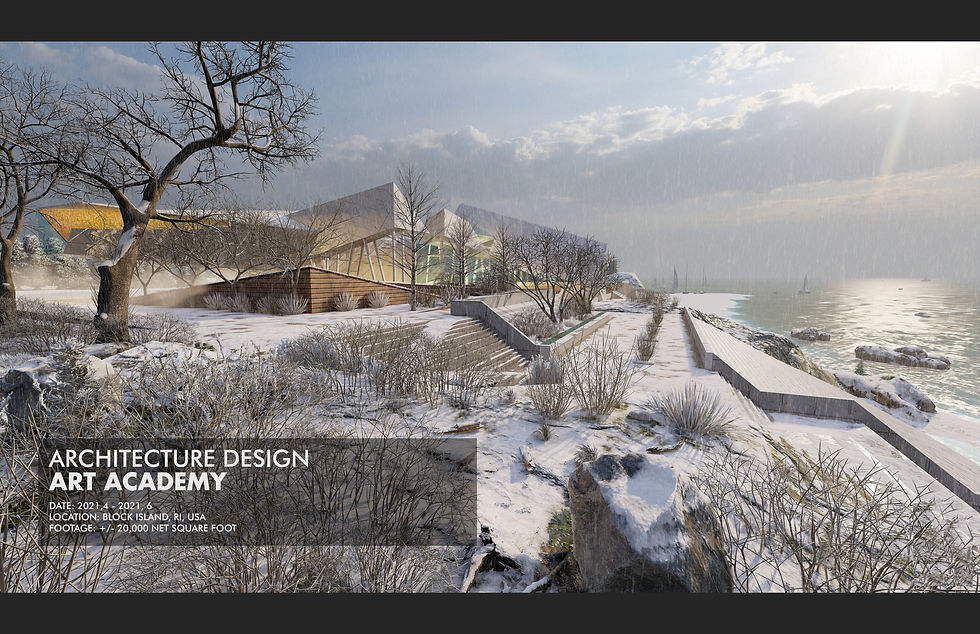
This project investigates the seasonal interactions and adaptive relationships between the traditional architecture and community of the Narragansett people and their natural context. Using the design of a community education center as a prototype, it further explores future possibilities for culturally and ecologically responsive adaptation within the local context. Among the many symbiotic practices developed by the Narragansett people throughout history, the wigwam and longhouse stand out as the most representative manifestations shaped by seasonal migration and shifts in subsistence strategies. These traditional practices of adaptation and coexistence with the nature offer significant inspiration for contemporary community design within the Narragansett context. The design takes the contemporary Narragansett community art academy as its prototype. Its multifunctional program, including student education and community cultural activities, emphasizes a strong sense of cultural connection. The architectural design integrates the application of Net Zero ecological design principles as a strategy that is simultaneously sustainable, community-oriented, and culturally resonant.


